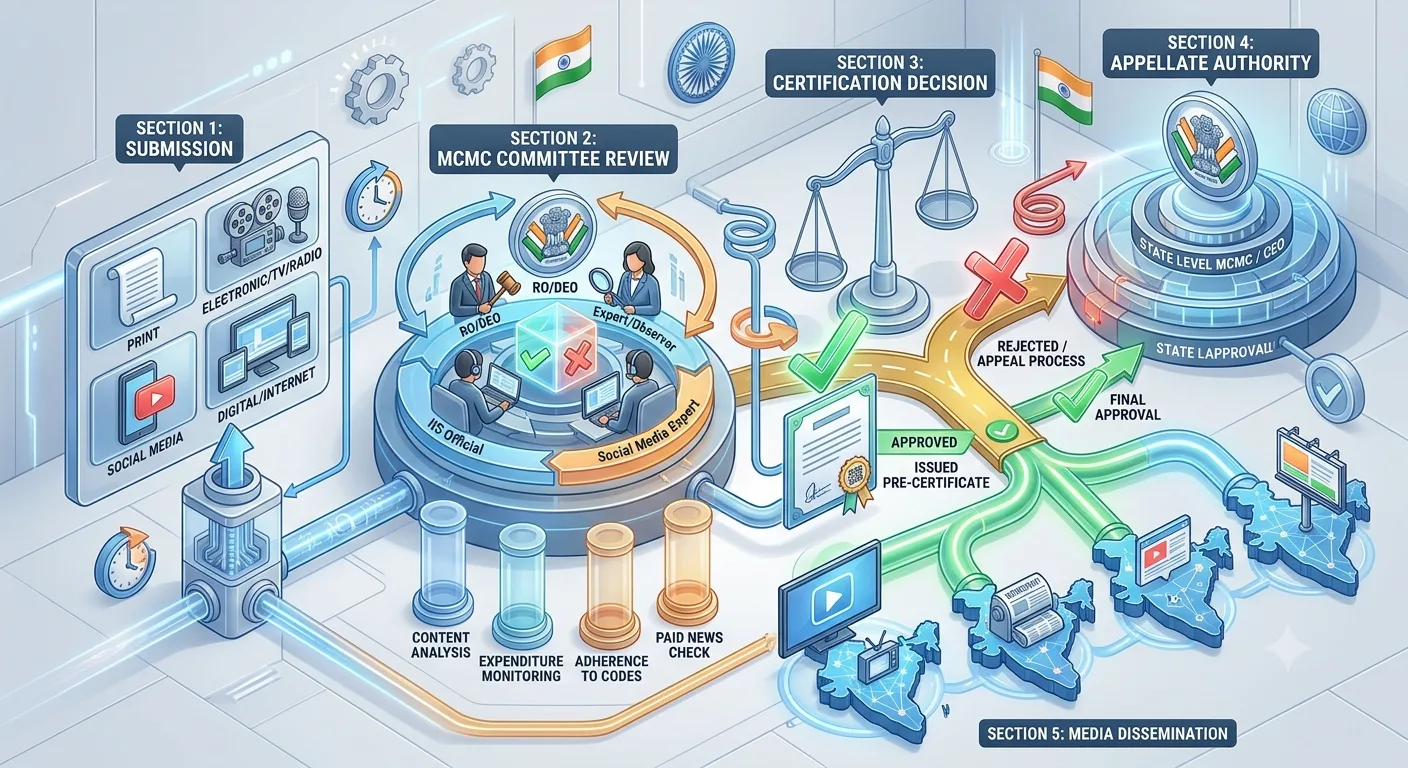

A political campaign agency should build its communication plan before the first message is scheduled. Start by agreeing on the communication’s purpose, the authorised spokesperson, the evidence behind every factual claim, the approval chain, the intended audience and the person who can pause activity. Then check the election-specific rules and channel requirements that apply to the exact material and date. A campaign calendar is not ready until every item has an owner, a review record and a safe stop path. For campaign messages that are classified, approved and eligible for telecom delivery, SMSNiti’s Bulk SMS service is the assigned service path. The bulk SMS campaign planning guide provides the connected operational pillar.
This article is neutral operational guidance for planning and coordination. It does not advise a candidate on what political position to take or how to persuade a voter group. Election instructions change by election and over time. Consult the current Election Commission of India (ECI) instructions, the relevant Media Certification and Monitoring Committee (MCMC), the state Chief Electoral Officer and the campaign’s legal adviser before release.
1. Define the communication job
List what the organisation needs to communicate: public schedules, verified programme information, event logistics, approved statements, service contact routes or factual corrections. For each item, write the audience in operational terms, the reason the information is useful, the action or detail the recipient needs, and the source record that supports it. Keep the plan focused on accurate information and clear process rather than assumed outcomes.
Separate public information, campaign advertising, event notices, internal coordination and customer or supporter service updates. The classification affects approvals, content handling, channel setup and reporting. Do not assume that a message is outside election rules because it is short, sent by phone, or labelled a “notice.” Ask the responsible compliance contact to determine how a specific item should be treated.
2. Confirm the election and publication timeline
Build the calendar around confirmed dates, not a generic countdown. Record the relevant election schedule, filing dates, public events, approval lead times, channel windows and the person responsible for updating the calendar when an official date changes. Add a pre-release review point so that a last-minute creative change does not bypass review.
ECI’s Model Code of Conduct information states that the Code applies from the announcement of an election schedule through completion of the election process, with scope depending on the type of election. ECI’s current instructions and election-specific directions should be checked for the jurisdiction and activity. See the ECI Model Code of Conduct page and its MCC FAQ as starting points, then verify current orders before each campaign window.
Include a calendar gate for periods when certain campaigning or advertising is restricted. The agency should not infer whether a planned item is permitted during a restricted period from a previous election or another state. Get a documented answer from the responsible election compliance adviser or authority before release.
3. Set named roles and approval records
Give each communication a clear owner. A workable approval chain may include the campaign’s authorised content owner, the person checking factual claims, the compliance reviewer, the channel operator and the final release approver. One person may fill several roles in a small team, but each decision still needs to be explicit.
For every version, record who wrote it, which source material was checked, who approved the wording, which channel or format it is for, when approval was given and whether certification or other permission was required. Keep the approved final copy and corresponding media together. If wording, offer, date, link, audience or channel changes, rerun the checks that the change affects.
Create one pause owner and a reachable escalation route. The operator should know how to stop a queued campaign, who to contact about an unexpected complaint or incorrect claim, and how the team will confirm that a pause took effect. Do not depend on an informal chat message sent to a person who may be unavailable.
4. Check political-advertising certification before production is final
ECI’s 20 March 2026 press note for the then-announced elections says political advertisements on electronic media—including bulk SMS or voice messages and social media—must be pre-certified by the relevant MCMC before publication. The note also describes which MCMC receives applications and that election-specific timelines apply. Treat that as a dated example of current ECI direction, not a universal substitute for checking the relevant election. Review the ECI’s 20 March 2026 press note, and ask the appropriate MCMC or legal adviser whether the proposed content is an advertisement and what submission route and lead time apply.
Certification needs to be planned into the production calendar. Identify who assembles the final copy and creative, who submits it, which version is sent for review, how a certification decision is stored and how the release operator checks that the approved version matches the scheduled one. If certification is pending, the campaign should remain paused.
5. Maintain a source file for claims and creative
Every factual statement about dates, venues, services, public records, proposals or other people should have an identified source and a reviewer. Mark opinion as opinion and verify information that can change. Do not use unattributed figures, manipulated imagery, fabricated endorsements, misleading edits or claims whose source the campaign cannot explain.
ECI’s 2026 note highlights action around misinformation and fake news. The agency should therefore define how a questionable claim is escalated, how corrections are approved and how a correction reaches the same audiences as the original item where appropriate. Do not build an automated message or creative around a claim simply because it is circulating publicly.
Use current, licensed or original assets. Check that names, translations, dates, symbols and image captions are correct. Confirm that the creative does not imply an endorsement or affiliation that has not been authorised. Keep a record of the asset source and rights with the approved copy.
6. Choose the channel for the information task
Match a channel to the recipient’s need and the approved workflow. A short factual update may fit a text message; an event coordination call may use voice; a person who wants to ask a question may need a staffed conversation route. Do not send the same item across several channels by default. Define which route is primary, whether a fallback exists, who handles replies and how duplicate contact is prevented.
For bulk SMS and voice, TRAI’s sender guidance describes requirements for Principal Entity registration, headers, content templates and consent processes where applicable under the telecom framework. Confirm the exact treatment of the campaign communication with the access provider and compliance adviser; do not assume that election certification replaces telecom setup or that all message types have identical requirements. See TRAI’s advice to senders before configuring bulk telecom communication.
Keep permission and suppression records with the approved audience process. Use only data the campaign is authorised to use for the stated purpose, apply applicable preferences and opt-outs, and limit access to the people who need it. Avoid sensitive profiling or targeting assumptions; the communication plan should document its legitimate audience basis and channel controls.
7. Prepare a release checklist and stop conditions
Before a communication is released, confirm the final content version, source review, MCMC status where required, audience, channel, sender identity, link, schedule, language version, responsible operator and pause contact. Check that the live destination loads and that the message matches the approved material. Ensure that the campaign team knows where responses go and how urgent queries are escalated.
Pause if the approval is missing, certification is required but not complete, the audience list changed after review, a channel configuration is uncertain, the destination is wrong, the material contains an unresolved factual question, or the schedule may conflict with current restrictions. Fix the issue, record the correction and rerun the affected reviews before restarting.
After release, monitor channel status and incoming concerns through an agreed process. Keep a timestamped log of what was sent, to whom in aggregate, through which approved route, and what changes were made. If an error is confirmed, escalate it promptly and use the pre-agreed correction workflow rather than making an improvised second send.
8. Report process and expenditure accurately
Agree on what the agency will report: planned and actual release times, approval and certification status, operational delivery information available from the provider, issues raised, corrective action and costs attributed to the work. Distinguish an attempted send from a provider-reported delivery and from a person reading or acting on information. Do not claim that a message changed a voting decision based on a delivery receipt or click.
ECI’s 2026 press note also discusses reporting internet campaign expenditure for the relevant election. Keep invoices, media plans, production costs and other required records under the campaign’s approved finance process, and verify current reporting dates and requirements with the election expenditure contact. This article is not a substitute for official instructions or legal advice.
Pre-campaign communication checklist
Communication types, audiences and purposes are recorded.
The live election schedule, applicable restrictions and approval deadlines are confirmed.
Content, factual sources, translations and creative rights have named reviewers.
Political-advertisement classification and MCMC pre-certification are resolved where required.
Bulk SMS or voice setup, audience eligibility, preferences and suppression are confirmed with the provider.
Release operators know the exact approved version and how to pause it.
Reply ownership, complaint escalation, correction steps and record keeping are assigned.
Reporting distinguishes release, delivery and later outcomes without unsupported claims.
Frequently asked questions
Does every message from a political campaign require MCMC pre-certification?
Do not decide from a general blog post. ECI’s 20 March 2026 note states requirements for political advertisements on electronic media in the elections it discussed. Classification and instructions can depend on the exact content, channel and election. Ask the relevant MCMC or election adviser before release.
Does an approved advertisement remove the need for telecom setup?
No. Certification and telecom sender requirements are separate checks. Confirm both where both apply, and verify the final message against the correct approved version.
Can an agency reuse the same plan for every state election?
Reuse the planning structure, not the assumptions. Refresh election dates, MCMC contacts, current ECI orders, telecom requirements, language needs, ownership and restrictions for each campaign.
What should the agency do if a scheduled message contains an error?
Use the pause and correction process defined before launch. Confirm what was sent, notify the responsible content and compliance owners, approve a correction and document the resolution. Do not send an unreviewed follow-up to the same audience.
Keep channel planning tied to verified process
Use the bulk SMS campaign guide for the connected operational planning pattern. Confirm current election requirements and provider capability before using the channel for a campaign.