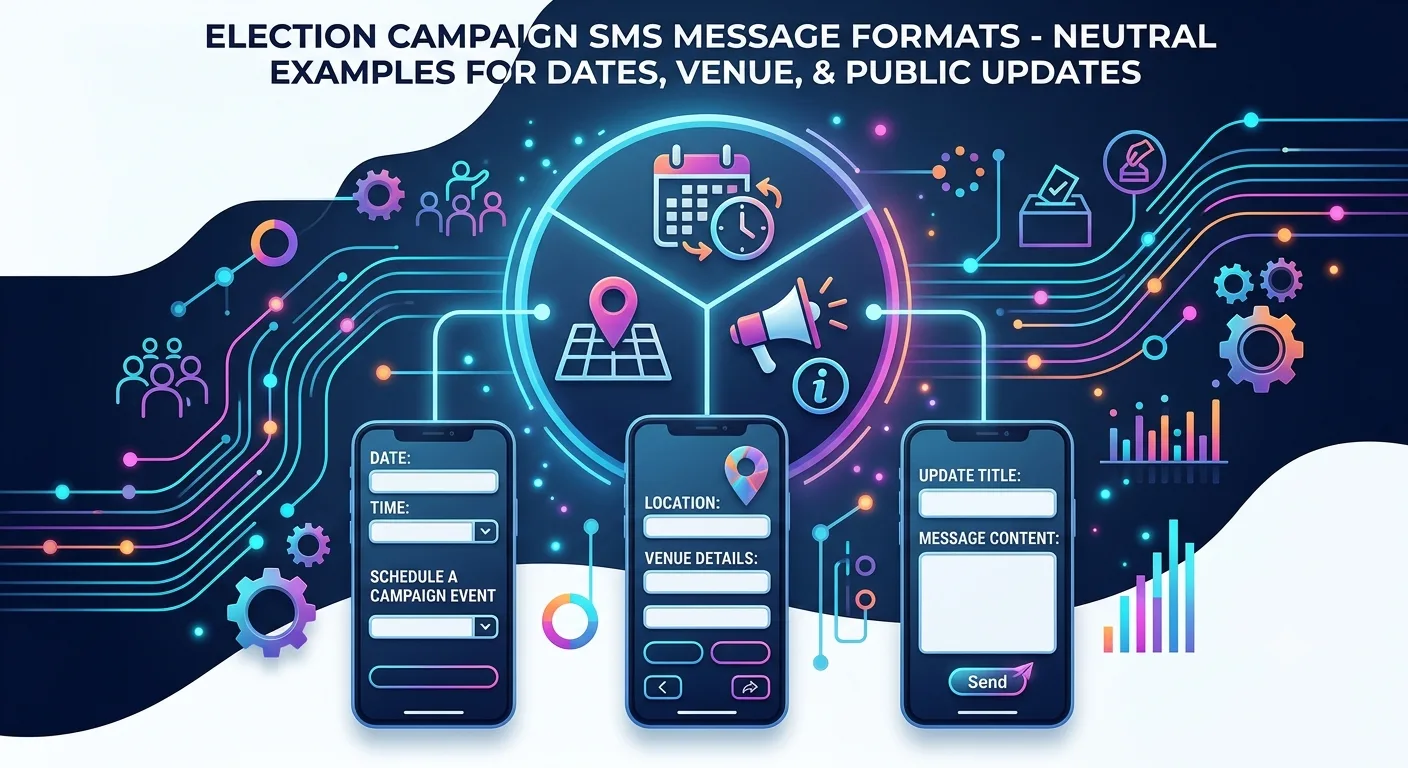

For election campaign communication, SMS suits short, factual, easy-to-verify notices such as a venue change or helpline number, while voice calls suit audio messages where a spoken, regional-language delivery matters. Choose by the message and the recipient, not by habit. Both channels need telecom setup, and both can need election-specific approval.
Campaign teams often ask which channel is better. The honest answer is that SMS vs voice calls for election campaigns is a question about the message, the audience and the approval time you have, not a contest with one winner. This guide compares the two on the points that matter in practice: content type, setup, risks, replies, reporting and review. It belongs to our wider guide to political campaign marketing in India, which explains the compliance checks that apply to every channel.
By Rupali Dahiwal. Last reviewed: 25 October 2026. This is operational guidance, not legal advice. Confirm the current rules for your election before you send.
The short comparison
Use this as a quick reference, then read the sections below for the reasoning.
SMS
Best for: short, factual notices with a date, place or number that the reader may want to keep or forward.
Strength: the text stays on the phone, so the reader can check it again.
Limit: short length, and regional scripts can reduce how much fits in one message.
Setup: sender, header and template registration on DLT. See SMSNiti's bulk SMS service for how sending and reports work.
Typical risk: template rejection, a wrong link, or a typo that is now in thousands of inboxes.
Reporting: delivery status per number.
Voice calls
Best for: an audio message where tone, language and pronunciation matter, or where a recipient may find speech easier than reading.
Strength: it can reach people in a spoken language, and key-press options can capture simple responses.
Limit: the message disappears after the call, and unwanted calls irritate recipients quickly.
Setup: calls are placed from registered numbers in the series allowed for the call type, and calling hours apply. See SMSNiti's bulk voice call service for features and reports.
Typical risk: poor pronunciation, the wrong recording version, calls at the wrong time.
Reporting: call reports showing who answered, how long they listened and which key they pressed.
Step 1: Start with the message, not the channel
Write one sentence for each message: what the recipient should know or do. Then match it to a channel:
A venue, date or time change: usually SMS, because the reader may want to check the detail again.
A helpline or contact number: SMS keeps the number on the phone. A voice message can say it, but the listener has to remember or note it.
A reminder in a regional language: either can work, but voice may suit recipients who are more comfortable listening.
A message that needs a simple reply: voice key-presses can capture a basic response. SMS needs a number or link to reply.
If a message is long, has several steps or depends on exact numbers, it is a poor fit for voice. If a message depends on how it sounds, it is a poor fit for SMS.
Step 2: Check what each channel needs before sending
Telecom setup
For commercial SMS, TRAI's guidance for senders lists Principal Entity registration, header registration, content templates, passing identifiers to the telecom service providers and, where applicable, consent through a registered consent template. TRAI's page says that failing to follow these steps will not allow you to send. See TRAI's advice to senders. Our TRAI and DLT checklist turns those steps into questions to settle before launch.
For voice, TRAI's page on unsolicited commercial communication treats SMS and voice calls alike as capable of being unsolicited, mentions robocalls and auto-dialer calls, and says commercial calls or messages from 10-digit numbers are not allowed. Which rules apply to a particular campaign call is a question for your telecom provider.
Election-specific approval
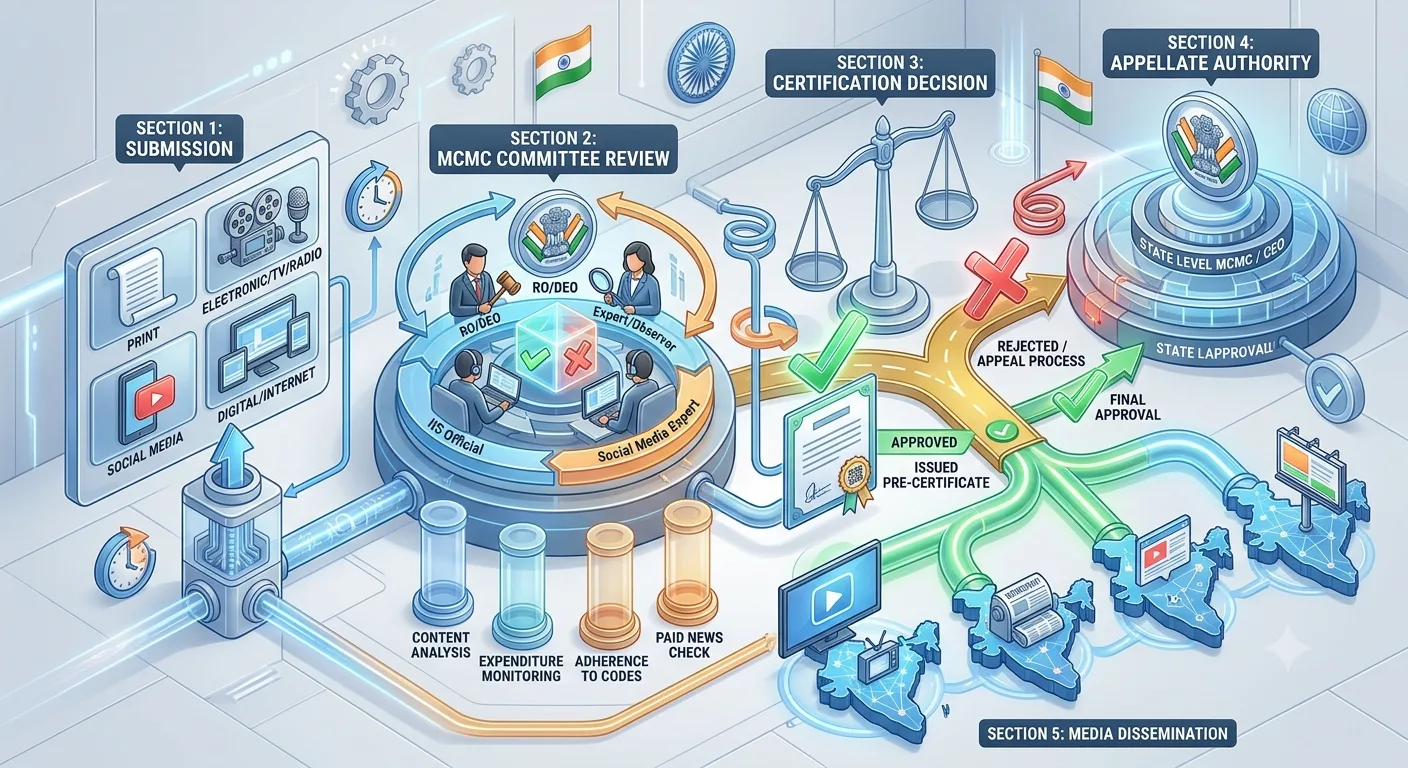
For the elections covered by its press note dated 20 March 2026, the Election Commission required political advertisements on electronic media, including bulk SMS and voice messages, to be pre-certified by the Media Certification and Monitoring Committee (MCMC) before publication. The same approval question applies to both channels. A voice recording and an SMS carrying the same words are two pieces of content, and each should be checked. Our guide to MCMC pre-certification explains how to verify what applies to your election.
Step 3: Weigh the risks side by side
Errors
An SMS error is visible and permanent. A voice error is spoken and gone, but it can be worse if the wrong name, place or number is said aloud to a large list. Both need a test send. Test SMS on several handsets, and test voice by listening to the full call on a real phone.
Irritation and complaints
Recipients tend to tolerate a single, clear text more than a call at an awkward time. SMSNiti's voice service lists a campaign panel window of 10 AM to 9 PM, and notes that promotional calls must stay within legally permitted hours. Keep call timing conservative, and do not send repeated calls to people who did not answer unless your approved plan says so.
Language and accessibility
Regional-language SMS depends on correct script and encoding, and longer scripts can break into several parts. Regional-language voice depends on pronunciation, pacing and audio quality. Have a native speaker review each. Do not guess which language a person prefers from other attributes. Use the language in your lawful brief.
Replies and follow-up
If recipients are likely to reply, decide who will handle those replies before you send. A voice campaign with key-press options needs a plan for what happens after a key is pressed. An SMS with a helpline number needs a staffed line.
Step 4: Decide when to use both
Using both channels can make sense, but only with a plan. A common, low-risk pattern is an SMS carrying the details, followed by a voice message only for a separate, approved purpose. Do not send the same notice on both channels by default. Define:
Which channel is primary for each message.
Whether a second channel is allowed, and under which approval.
How you will avoid contacting the same person repeatedly.
Who handles complaints and opt-outs across both channels.
Treat any follow-up message as its own item with its own review.
Step 5: Use a simple decision path
Is the message short, factual and something the reader may want to keep? Choose SMS.
Does it depend on spoken language, tone or pronunciation? Consider voice.
Is approval for the final text or audio in hand, where it applies? If not, do not schedule.
Is the sender setup complete for that channel? If not, finish it first.
Has a test been run on real phones? If not, test.
Is there a named person who can pause the send? If not, name one.
Why WhatsApp and RCS are not in this comparison
Readers often ask about WhatsApp. WhatsApp's Business Messaging Policy, shown as last updated on 23 September 2026, lists political parties, politicians, candidates and campaigns, and entities offering political campaign services, among those prohibited from using its business messaging platform. Because of that, this cluster covers SMS and voice only, and you should read the policy and confirm with WhatsApp before considering it for campaign communication. We have not assessed RCS for political campaign use here, so we do not compare it.
Measuring the result honestly
Both channels give delivery or call status, and neither tells you whether anyone changed their view or vote. Report sent, provider-reported delivered, answered or key-pressed (for voice), and issues raised. Do not publish benchmark rates you cannot support with your own logs. For a review structure, see how to plan a bulk SMS campaign from brief to post-campaign review, and for voice planning, see how to plan a bulk voice campaign.
Common mistakes
Choosing by habit. Match the channel to the message.
Sending the same item on both channels by default. This annoys recipients and doubles risk.
Treating one approval as covering both. Check the SMS text and the audio file separately.
Skipping the test. Test on real phones.
Calling at awkward times. Keep within allowed hours and be conservative.
No reply plan. Decide who answers before you send.
Frequently asked questions
Is SMS or voice better for election campaigns?
Neither is better in every case. SMS suits short factual notices that people may want to keep. Voice suits audio messages where language and pronunciation matter. Choose by message and audience, and check approvals for each.
Do voice messages need the same approval as SMS?
The Election Commission's note of 20 March 2026 named bulk SMS and voice messages together within electronic media for pre-certification in the elections it covered. For another election, check that election's orders. Whether a particular message counts as a political advertisement is a question for the MCMC or a qualified adviser.
Can I use both channels for the same message?
You can, if your plan says so and each item is approved. Avoid sending the same notice on both by default.
What hours can campaign calls be made?
Calling hours are set by rules and by your provider. SMSNiti's voice service lists a campaign panel window of 10 AM to 9 PM, and says promotional calls must stay within legally permitted hours. Confirm the position for your election and call type.
Can I use WhatsApp for political campaigns?
WhatsApp's Business Messaging Policy lists political parties, politicians, candidates and campaigns among those prohibited from using its business messaging platform. Read the current policy and confirm with WhatsApp before considering it.
Sources checked
Election Commission of India, Press Note No. ECI/PN/038/2026 dated 20 March 2026. Checked 24 October 2026.
TRAI, Advice to Senders / Telemarketers, last updated 23 October 2026 as shown on the page. Checked 24 October 2026.
TRAI, What is spam or UCC, last updated 23 October 2026 as shown on the page. Checked 25 October 2026.
WhatsApp, Business Messaging Policy, last updated 23 September 2026 as shown on the page. Checked 25 October 2026.
SMSNiti bulk SMS service and bulk voice call service pages, for the feature descriptions used. Checked 25 October 2026.
If you are unsure which channel fits your campaign, ask SMSNiti to walk through your message types and approvals. Bring your draft messages and your approval status so the discussion can be specific.