A channel fallback plan for campaign communication lists what you will do if SMS or voice cannot deliver an approved message in time: the trigger, who decides, which alternative channel is already approved, what is sent and to whom, and how you avoid contacting people twice. Build and approve it before the campaign, and never improvise a fallback during an incident.
Plans fail at the worst moments: a template is rejected the day before an event, a platform has a fault, delivery drops or a link breaks. A campaign communication channel fallback plan turns that moment from a scramble into a procedure. This guide covers SMS and voice only, explains how to design triggers and alternatives, and shows how to keep a fallback compliant. It belongs to our wider guide to political campaign marketing in India. It focuses on failure scenarios, while our guide to SMS vs voice calls focuses on choosing a channel in the first place.
By Rupali Dahiwal. Last reviewed: 2 November 2026. This is operational guidance, not legal advice. A fallback is a new send in the eyes of the rules, so it needs the same approvals as any other message.
What a fallback plan is, and what it is not
A fallback plan is a written, pre-approved answer to the question: what do we do if the planned channel fails? It is not a promise that one channel can substitute for another, and it is not permission to send the same message twice. A fallback has its own content, its own audience and its own approvals, and it must respect the same restricted periods and consent rules as the original plan.
This guide does not cover WhatsApp or RCS. WhatsApp's Business Messaging Policy lists political campaigns among those prohibited from its business messaging platform, as explained in our guide to WhatsApp and political campaigns, and we have not assessed RCS for this use. Plan around SMS and voice.
Step 1: List the failure scenarios
Start with what can realistically go wrong, in order of likelihood and impact:
Template rejected or delayed. Telecom service providers approve or reject SMS templates, so you cannot control timing.
Platform or panel fault. The provider's system is slow or unavailable at a critical time.
Delivery problem. Reports show unusually low delivery or answer rates for a batch.
Content error. A wrong date, number or link is found before or after a send.
Window problem. A planned send would fall into a restricted period, or a calling-hours limit.
Recording problem. A voice file is rejected, mispronounced or unavailable.
Helpline overload. A message triggers more calls than staff can handle.
Approval delay. An election-specific approval has not arrived.
Step 2: Define a trigger for each
A trigger is the observable condition that starts the fallback. Make it specific, so nobody argues at the time. Examples: "template not approved by [time] on [day]"; "panel unavailable for more than [minutes] after the scheduled start"; "first batch delivery rate below [threshold you set from your own tests]"; "error found in a version after release". Use thresholds you have set yourselves, based on your own test results, not on benchmarks from elsewhere.
Step 3: Decide the response for each trigger
For each scenario, choose one response from this short list:
Wait and retry. Appropriate for brief platform faults, within the allowed windows.
Pause and fix. The right response to a content error. See how to pause and correct a wrong message.
Switch channel. Use the other of SMS and voice, only with approved content and a lawful basis to contact the people concerned.
Reduce scope. Send a shorter, essential notice to fewer people.
Stand down. Do not send. Sometimes the right fallback is to skip a message that can no longer be sent safely.
Step 4: Pre-approve the alternative content
If a fallback means using another channel, prepare that content in advance. An SMS and a voice message carrying the same facts are different items: the SMS needs a registered template, and the voice recording needs its own script, review and audio check. Put both through the normal approval workflow before the campaign, and keep them marked "standby". Our approval workflow guide shows how to number and record versions.
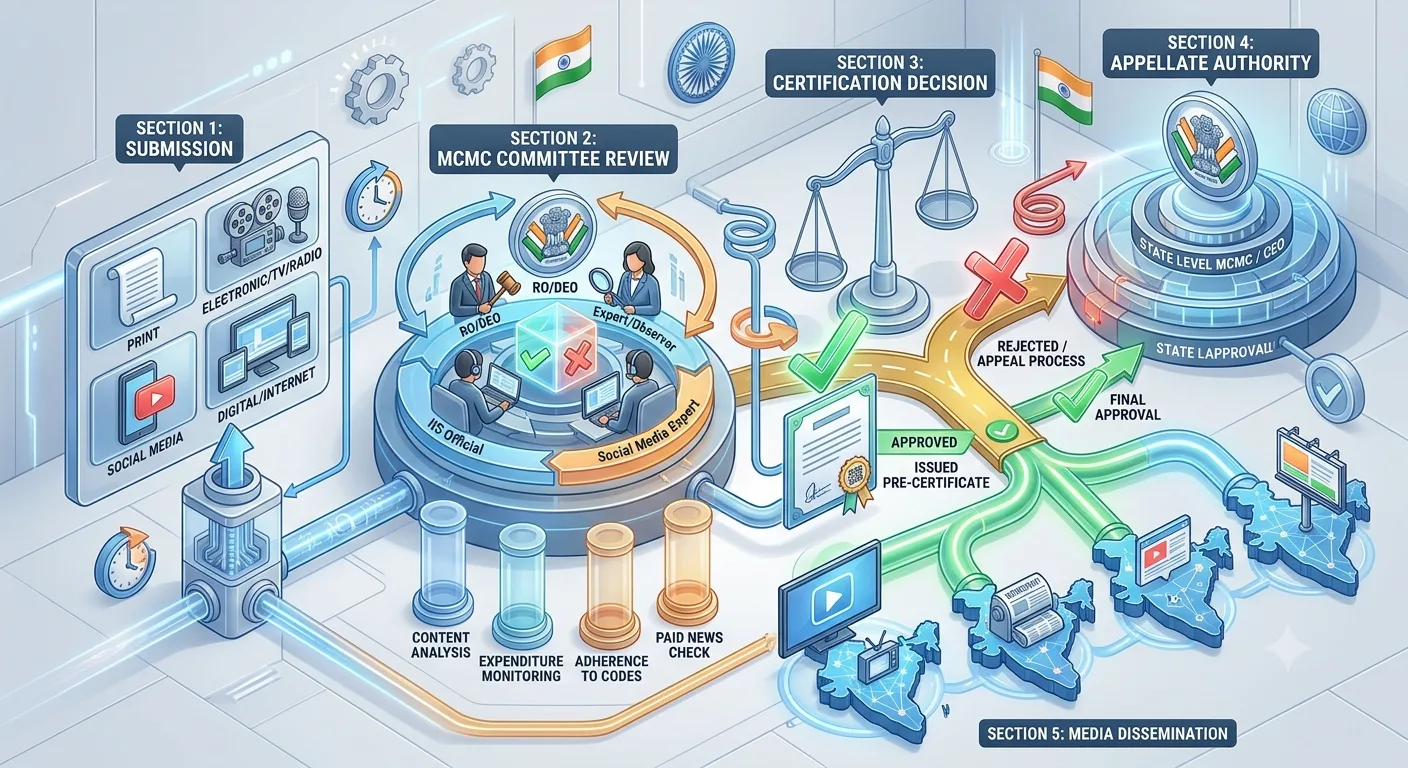
Check election-specific approval too. For the elections covered by its press note of 20 March 2026, the Election Commission required political advertisements on electronic media, including bulk SMS and voice messages, to be pre-certified by the Media Certification and Monitoring Committee. If approval applies to the original message, ask whether the fallback version needs its own. Do not assume that approval of one channel covers the other. See MCMC pre-certification.
Step 5: Protect against double contact
The biggest fallback mistake is contacting the same person twice with the same message, which annoys recipients and can breach your own plan. Prevent it:
Define exactly who gets the fallback: only those who did not receive the original, or only a defined group.
Use delivery reports to build the fallback list, and check them before sending.
Apply the suppression list again. Check that nobody who opted out is included.
Do not use an automatic fallback rule without testing it on a small list first.
Leave a gap between the original and the fallback, so delayed deliveries have time to arrive.
Step 6: Respect rules in every fallback
Consent and preferences. A person who agreed to SMS updates has not necessarily agreed to calls. Check the permission basis for the other channel. TRAI's page on unsolicited commercial communication treats SMS and voice calls alike, so ask your telecom provider how it applies. See contact lists and consent records.
Calling hours. SMSNiti's voice service lists a campaign panel window of 10 AM to 9 PM and says promotional calls must stay within legally permitted hours, so a late-day fallback by voice may simply not be possible.
Restricted periods. A fallback must not fall inside a restricted window. See election silence period and pause windows.
Telecom setup. A fallback SMS needs a registered template and header. A fallback voice call needs the right setup for the call type.
Step 7: Name the decision-maker and the contacts
For each scenario, name the person who may trigger the fallback, and the person who must approve it. List the provider's urgent contact, the pause owner and the helpline lead. Put the list on one page and keep it where all of them can reach it. In a real incident, nobody should need to search for a phone number.
Step 8: Test the plan
Run a short drill before the campaign. Pick one scenario, such as a rejected template, and walk through the plan: who is told, what is switched on, what list is built and who approves. Time it. If any step needs information that is not in the plan, fix the plan. Test the standby SMS and the standby voice message on real phones, as you would any other content.
A fallback plan template
Scenario and its trigger.
Decision-maker and approver.
Response: wait, pause, switch channel, reduce scope or stand down.
Standby content, version number and approval status.
Audience for the fallback and how the list is built.
Double-contact check and suppression check.
Rule checks: consent, hours, restricted periods, setup.
Contacts: provider, pause owner, helpline lead.
Record to keep after use.
A hypothetical example
This is an illustration, not a real case. A team plans an SMS reminder for an event, with a registered template, and a standby voice reminder that has been recorded, reviewed and approved. On the afternoon before the event, the template is still pending. The trigger in the plan says that if the template is not approved by a set time, the decision-maker may authorise the voice reminder to registered attendees who agreed to calls. The release approver checks that the voice version is approved, that the call window allows it and that the list excludes opt-outs. The call goes out, the report is checked, and the incident record notes why the fallback was used and what changes next time. Because everything was prepared in advance, the decision took minutes.
Common mistakes
Improvising during the incident. Errors multiply under pressure.
Treating a fallback as free of approvals. It is a new send.
Double sending. Build the list from reports and check suppression.
Assuming consent carries across channels. Check the basis for each.
Ignoring calling hours. A voice fallback may be impossible late in the day.
Never testing. Untested plans fail.
Frequently asked questions
What is a channel fallback plan?
A pre-approved procedure that says what to do if the planned channel cannot deliver a message in time: the trigger, the decision-maker, the alternative and the checks.
Can I send the same message by voice if the SMS fails?
Only if the voice version is approved, you have a lawful basis to contact those people by voice, calling hours and restricted periods allow it and you avoid contacting the same person twice.
Does a fallback need election-specific approval?
It can. Ask the relevant committee or a qualified adviser whether the fallback version is treated separately, and do not assume the original approval covers it.
Why does this guide not cover WhatsApp or RCS?
WhatsApp's Business Messaging Policy lists political campaigns among those prohibited from its business messaging platform, and RCS has not been assessed here. This series covers SMS and voice.
How often should a fallback plan be tested?
Before each campaign, and whenever roles, providers or channels change.
Sources checked
Election Commission of India, Press Note No. ECI/PN/038/2026 dated 20 March 2026. Checked 24 October 2026.
TRAI, What is spam or UCC, last updated 23 October 2026 as shown on the page. Checked 25 October 2026.
TRAI, Information Note to the Press dated 8 September 2025, on the role of telecom service providers in template approval. Checked 24 October 2026.
WhatsApp, Business Messaging Policy, last updated 23 September 2026 as shown on the page. Checked 25 October 2026.
SMSNiti bulk voice call service page, for calling hours and retry features. Checked 25 October 2026.
Before your campaign, ask SMSNiti about bulk voice calls how a standby recording can be uploaded and scheduled, and what the calling-hours limits are, and get the answers in writing.