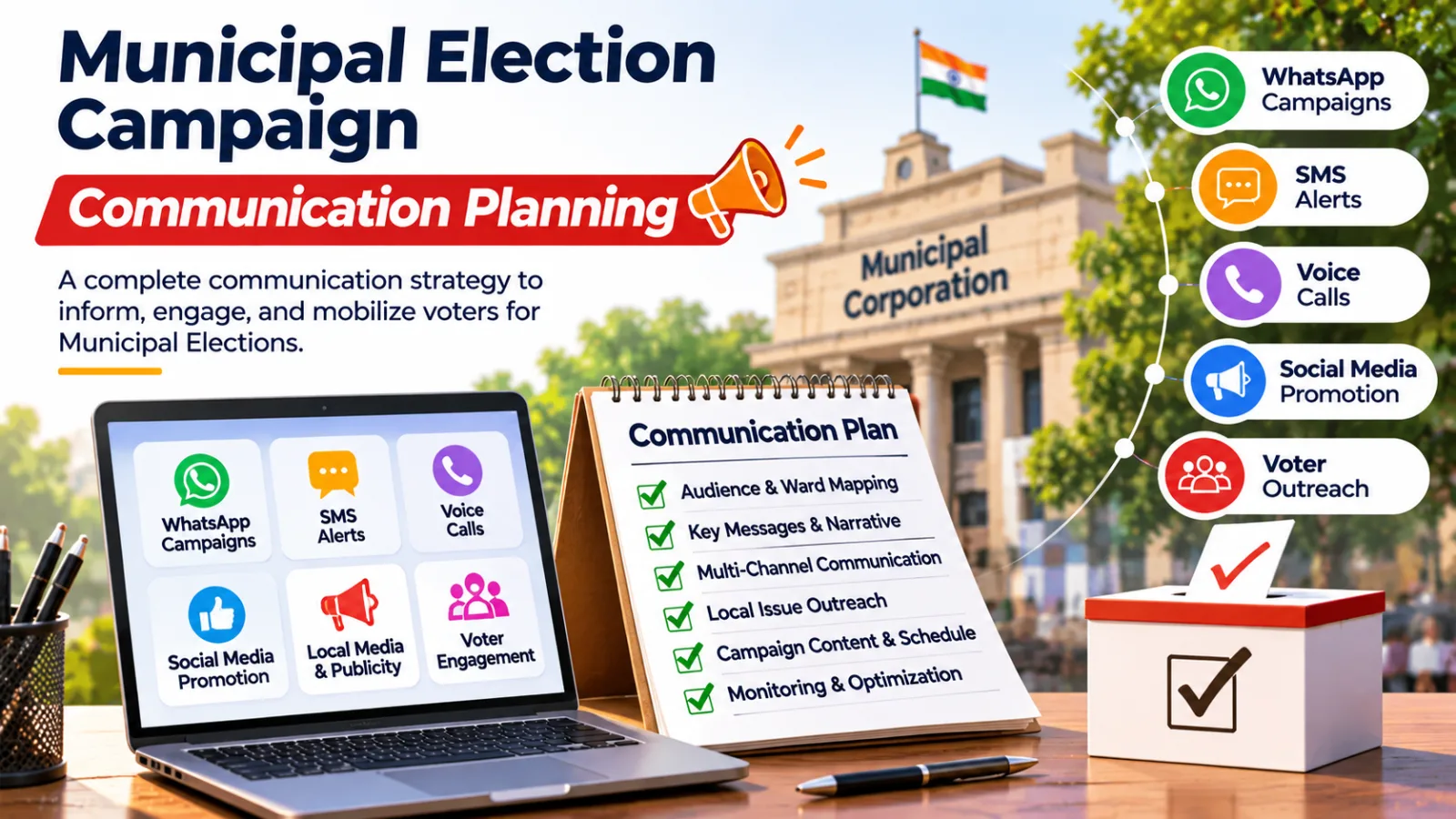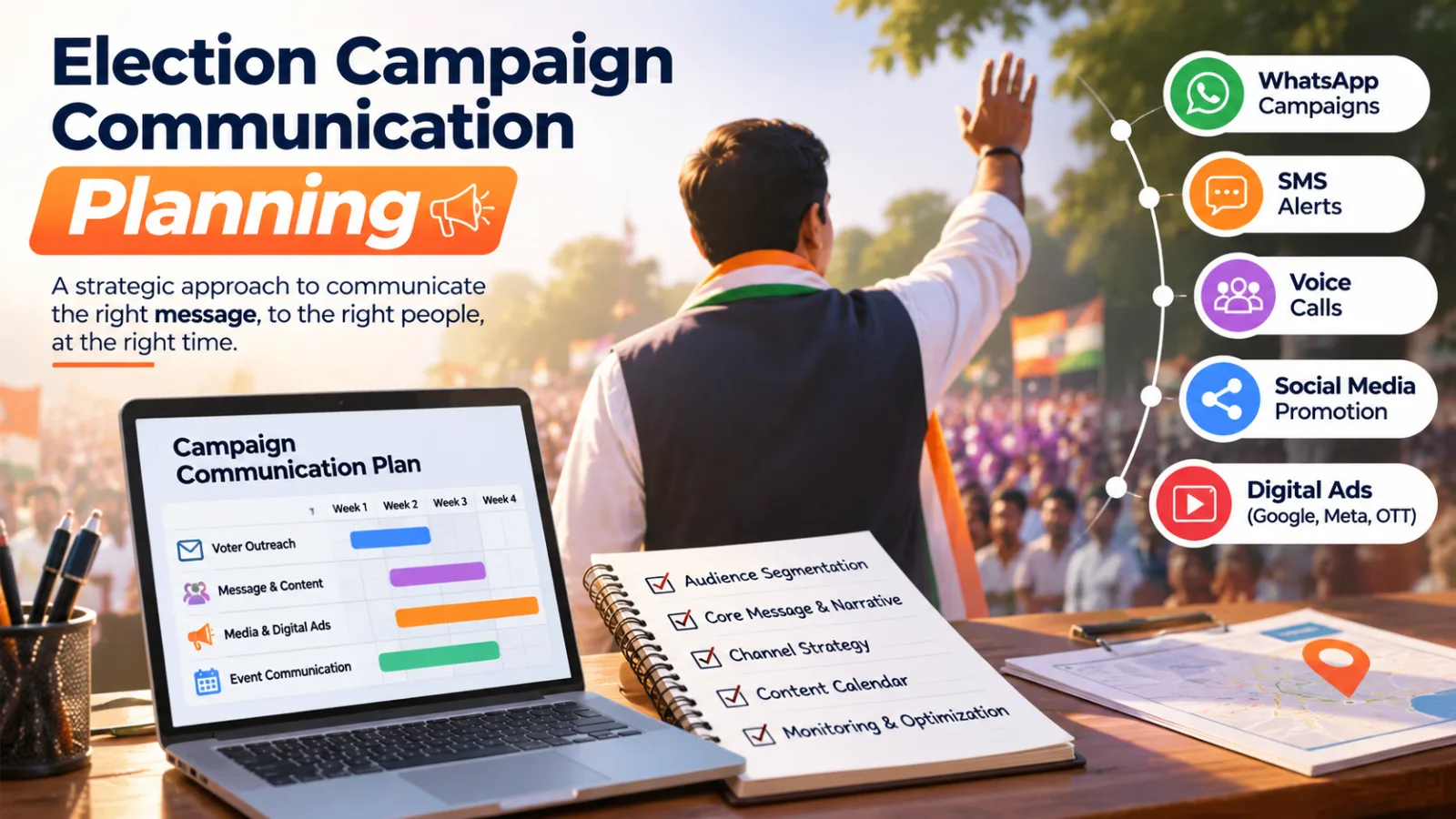
Yes, you can plan SMS, voice and WhatsApp campaigns around the area you are contesting, as long as you have data for that area and permission to use it. Location-based election campaign messaging means organising your sends by constituency, assembly area, pin code or ward, where the data allows, with consent and DND rules applied.
This guide is part of our wider guide to political campaign marketing in India. It explains the area levels you can work with, where the numbers come from, what is not offered, and how the area split shows up in a report.
By Rupali Dahiwal. Last updated: 7 November 2026. This is operational guidance, not legal advice.
For how we run these campaigns, see our election campaign SMS, voice and WhatsApp service page.
Which area levels can a campaign use?
A campaign can be organised by constituency, assembly area, pin code and ward, where data is available. Not every area has the same quality of data. Ward-level lists are often the hardest to get, and a pin code can cross constituency boundaries. Decide which level you need for each message before you collect numbers, not after. A rally invitation for one ward needs a ward list. A statewide notice does not.
Where do the numbers come from?
There are two honest sources. The first is your own list: supporters, members, volunteers and past contacts who gave you their number for this purpose. The second is data supplied for an area. Candidates and party offices usually ask us first whether we have data for their ward or assembly area. Smsniti has an audience database service you can ask about. Availability differs from area to area, and how the data was collected matters as much as the numbers. Ask where it came from and whether the people agreed to be contacted, and read our guide to contact lists and consent records before you use any list.
What do consent and DND mean for area-based sends?
A number can sit in the right ward and still be one you should not message. Numbers registered on DND are much less likely to receive an SMS or a voice call, and a promotional message to a number that has not agreed to it can break the rules. Apply your suppression list before every send and keep the consent records you can produce.
WhatsApp adds a further condition. Contacts should have agreed to hear from you, and WhatsApp's own policy applies. Smsniti provides a bulk WhatsApp marketing service for opted-in contacts, where WhatsApp allows it in your country. Our guide to WhatsApp and political campaigns explains the policy.
What is not offered?
We do not target single named people, and we do not target by polling booth. We do not claim to know how any person intends to vote, and we do not build lists on that basis. The unit is the area, and the area levels are the ones above.
How do you prepare an area plan?
Write down the areas you will cover and the message for each.
Note where the numbers for each area come from and what consent sits behind them.
Keep one clean sheet per area, with every number in a plain format. Numbers with spaces or special characters are not recognised, and no message is sent to them. The replace option in Excel removes the extra characters quickly.
Get the text approved, then the SMS template or the voice clip. Approval takes time, so do not leave it to the last week.
Set the send time inside the sending hours. Our WhatsApp marketing portal runs between 10 am and 6 pm, and we do not run campaigns after 8 pm.
Agree who can pause a campaign, and how.
How does the area split show up in the report?
If you keep a separate list for each area and name each campaign after its area, the delivery report for each campaign tells you what happened there. If you mix areas in one list, the report cannot separate them afterwards. Name campaigns so that someone who was not there can tell which area and which message they were. Our guide to measuring campaign delivery explains what a report can and cannot show.
Plan for delivery of up to about 75 per cent, because of invalid numbers and other issues in the messaging ecosystem. That is true of SMS, voice and WhatsApp.
Frequently asked questions
Can I send only to my own constituency?
Yes, if you have numbers for it and permission to use them. Organise the lists by the area you are contesting and keep each area's campaign separate.
Does Smsniti have data for my area?
Ask us. Availability differs by area. We will tell you what exists for the constituency, ward or pin code you name.
Can WhatsApp be used in the same way?
For opted-in contacts, where WhatsApp allows it in your country. Read WhatsApp's policy and our guide to WhatsApp and political campaigns first.
Do the approvals change by area?
No. A political message needs approval before it goes out, whatever area it is for. See our guide to MCMC pre-certification.
Sources checked
TRAI, What is spam or UCC, last updated 23 October 2026 as shown on the page. Checked 7 November 2026.
TRAI, Advice to Senders / Telemarketers, last updated 23 October 2026 as shown on the page. Checked 7 November 2026.
Election Commission of India, Model Code of Conduct page. Entry point for current orders. Checked 7 November 2026.
Election Commission of India, Press Note No. ECI/PN/038/2026 dated 20 March 2026. Checked 7 November 2026.
If you are about to start, the political campaign messaging service page shows how to reach us with your area and dates.
About the author: Rupali Dahiwal is the founder of Smsniti and has around 8 to 10 years of experience in telecommunications. Rupali Dahiwal on LinkedIn.