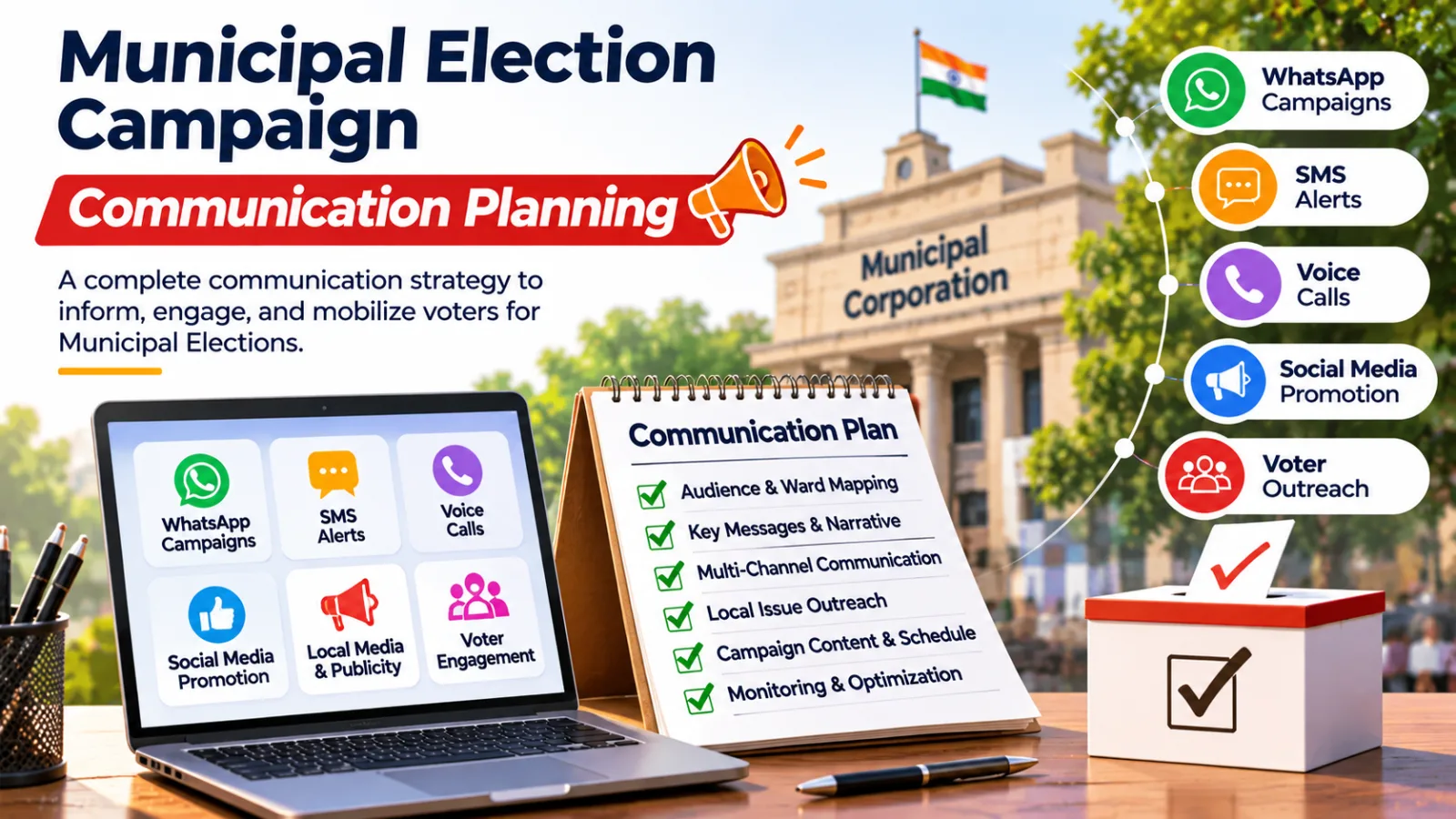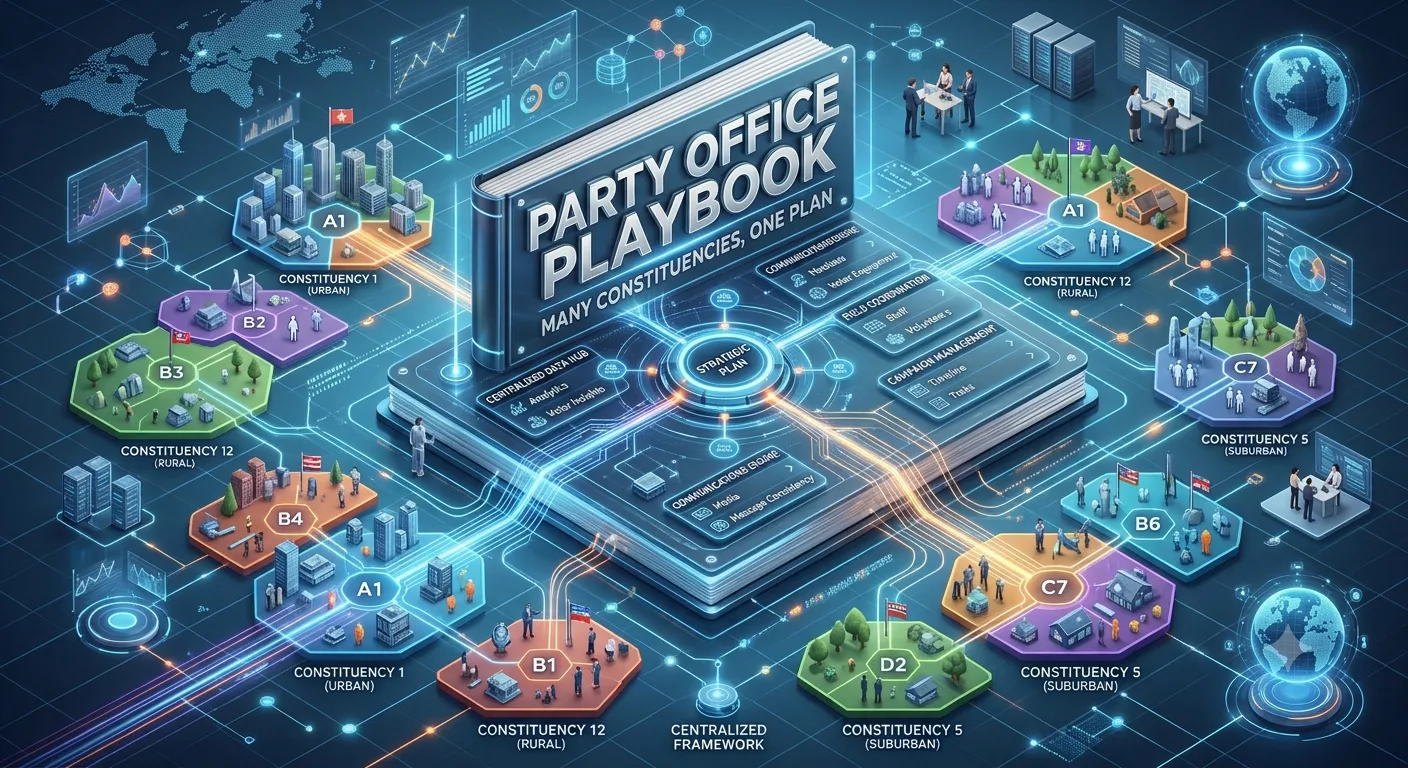
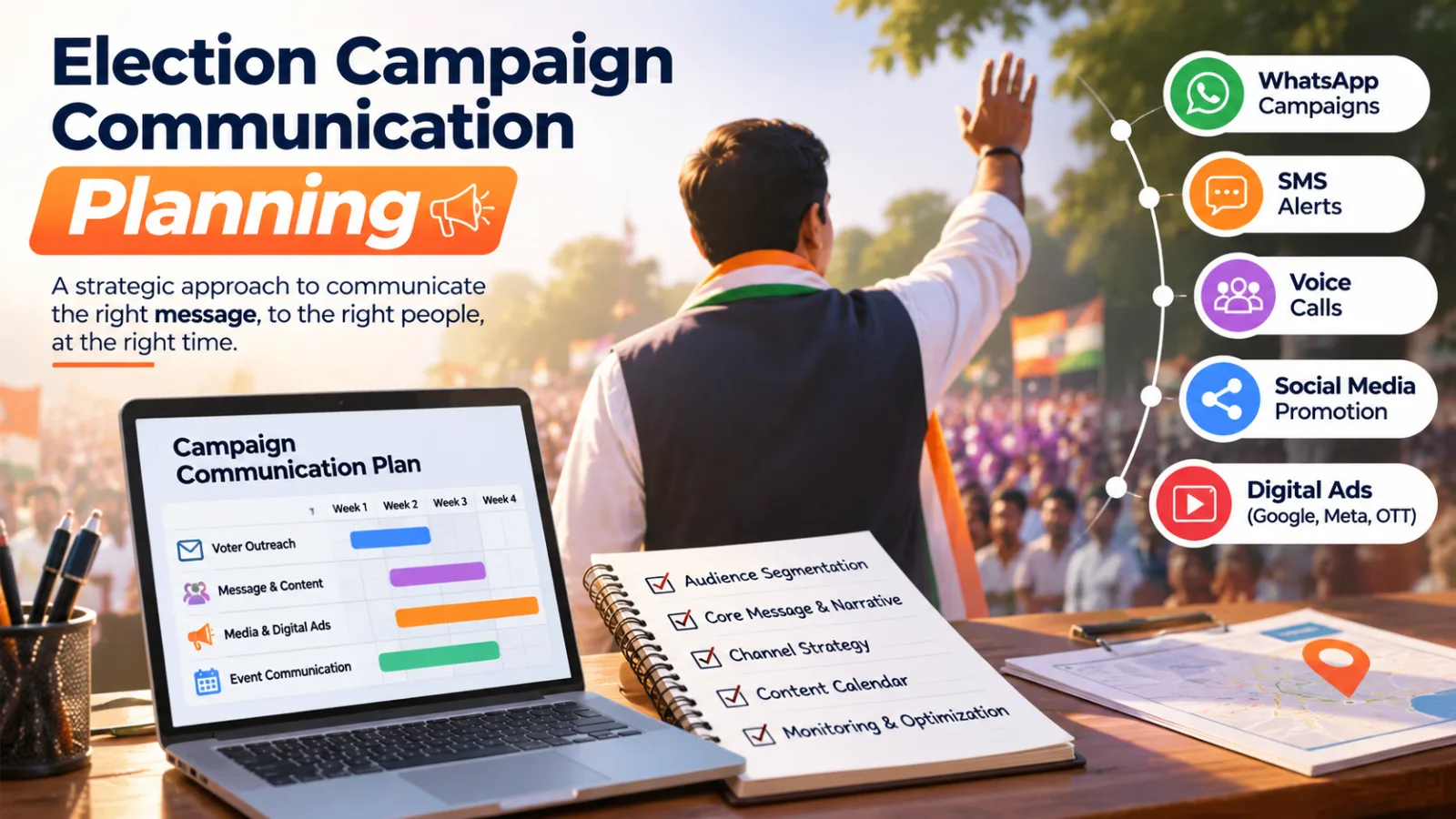
A by-election gives you one constituency and a short window set by a single notice, so plan backwards from the dates in that notice and have the approvals, the lists and the pause plan ready before it arrives. This guide shows what to prepare in advance and what to do once the schedule is out.
It sits inside our wider guide to political campaign marketing in India and is written for candidates, party offices and campaign staff.
By Rupali Dahiwal. Last updated: 7 November 2026. This is operational guidance, not legal advice.
Smsniti’s political campaign messaging service page explains the channels and how a campaign is set up.
What is different about a by-election?
The Election Commission of India announces a by-election through a press note, which gives the schedule for the seats concerned. You will not know the dates until it is published, and the gap between the notice and polling is short. We do not give typical timelines here, because the schedule in each notice is what counts, and it changes from one by-election to the next. The Commission lists by-elections on its by-elections page and that is the place to check first.
The rules that apply to a general campaign still apply. A political message needs pre-certification before it goes out, and the silence period still stops election communication before polling. Read the orders issued for the election, since they say how those rules apply to your seat. Our guides to MCMC pre-certification and the election silence period explain how to verify each.
What can you prepare before the notice?
Everything that does not depend on a date. Register the sender and the templates on DLT. Clean the constituency list, with one number per row in a plain format, because numbers with spaces or special characters are not recognised and no message is sent to them. Draft the first messages and the voice script, and agree who approves them. Read the approval workflow guide and write down the route, so that nobody has to invent one under pressure.
Keep the plan to one constituency. That makes the area simple: one list, one set of languages, one reviewer. If you need numbers for the area, ask us what data is available. Our guide to location-based election messaging by ward and pin code explains how the area levels work.
How do you plan backwards from the notice?
Copy the polling date, the last day of campaigning and the start of the silence period from the notice.
Put the silence-period start in the calendar as a hard stop.
Work backwards: the last send, the earlier sends, the approvals for each, and the day payment must be made.
Leave a gap for approval. Template and voice clip approvals take time, and we do not control the operators.
Name the person who can pause every channel, and make sure they can be reached.
Short windows reward early work. Teams that start with approved templates and a clean list are the ones that can send several times in the final days. Teams that start from nothing often send once or not at all.
What can go wrong in the final days?
Two things. Some campaigns slow down just when frequency matters, because the credits, the approvals or the lists are not ready. Others keep sending after the silence period has begun, which breaks the Commission's rules. Plan the last sends well before the cut-off. Our correction and pause workflow is the place to look if a message needs to be corrected or stopped.
Plan for delivery of up to about 75 per cent, because of invalid numbers, DND and other issues in the messaging ecosystem. We tell every client this up front.
Who needs to be involved?
A by-election campaign is small enough that a few people can run it, but the roles should still be clear. One person owns the calendar and the dates. One person approves the final text. One person handles the lists and the uploads. One person can pause every channel, and a second can do it if the first is unreachable. Write the names and phone numbers on a single page and share it with the team and with your account manager at the provider.
Keep a record of each approval and each send. If a message is questioned later, a dated file with the approved text, the list used and the delivery report answers the question faster than memory does. Our guide to close-out reporting and logs lists what to keep.
Frequently asked questions
How long is a by-election campaign?
It depends on the schedule in the Commission's press note. Do not assume a fixed number of days.
Do I need approval for by-election messages?
Political advertisements, including bulk SMS and voice messages, need pre-certification. Read the orders issued for the election to see how that applies to your messages.
Can I prepare before the dates are announced?
Yes. Register the sender, clean the list, draft the messages and agree the approval route. Fill in the dates when the notice arrives.
Which channels can I use?
Smsniti provides bulk SMS, bulk voice calls and a bulk WhatsApp marketing service, where WhatsApp allows it in your country. Our comparison of SMS and voice calls helps you choose.
Sources checked
Election Commission of India, by-elections page. Checked 7 November 2026.
Election Commission of India, Press Note No. ECI/PN/038/2026 dated 20 March 2026. Checked 7 November 2026.
Ready to plan? Share your constituency, ward or pin code areas and your dates on the location-based election campaign messaging page.
About the author: Rupali Dahiwal is the founder of Smsniti and has around 8 to 10 years of experience in telecommunications. Rupali Dahiwal on LinkedIn.