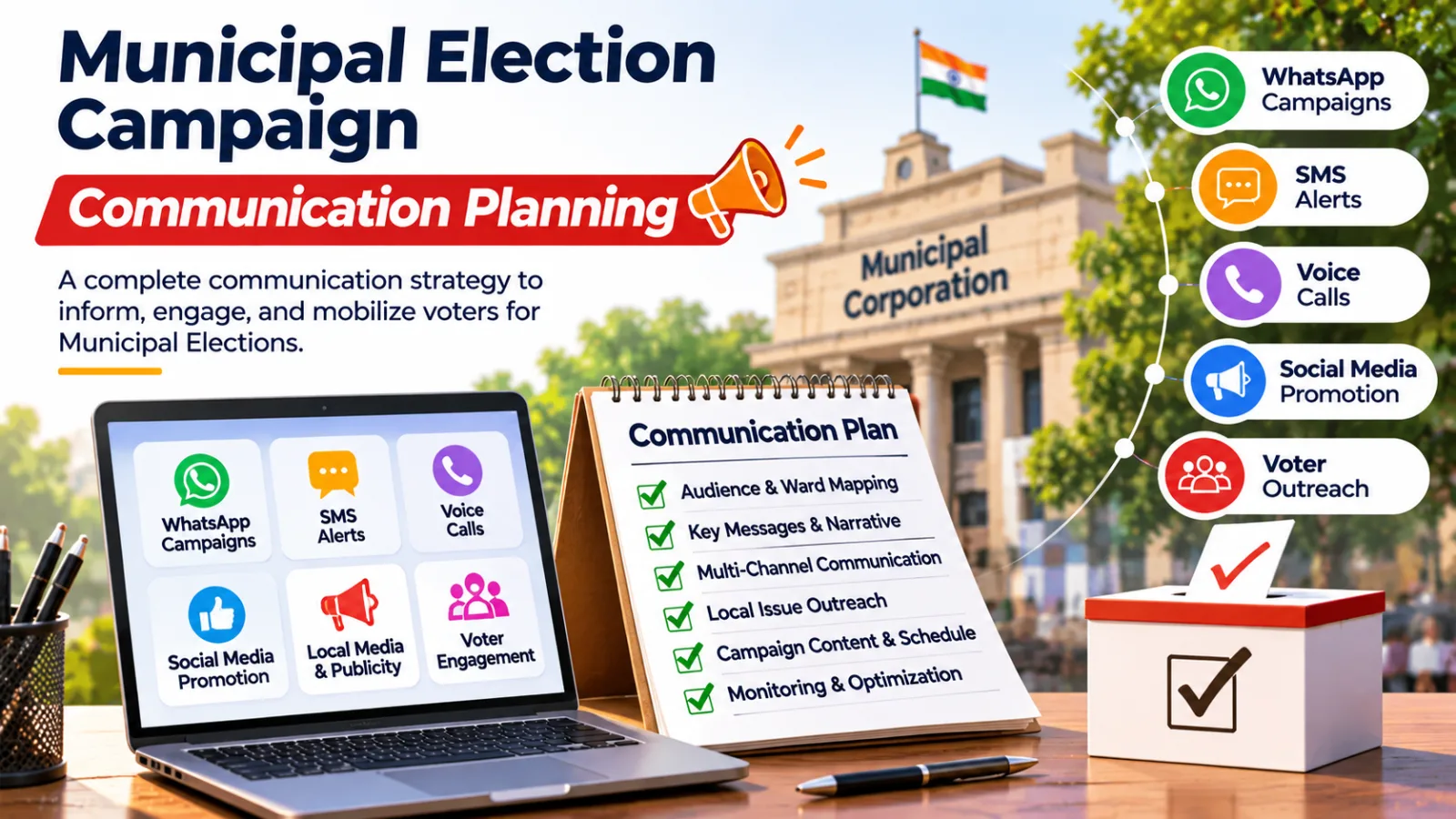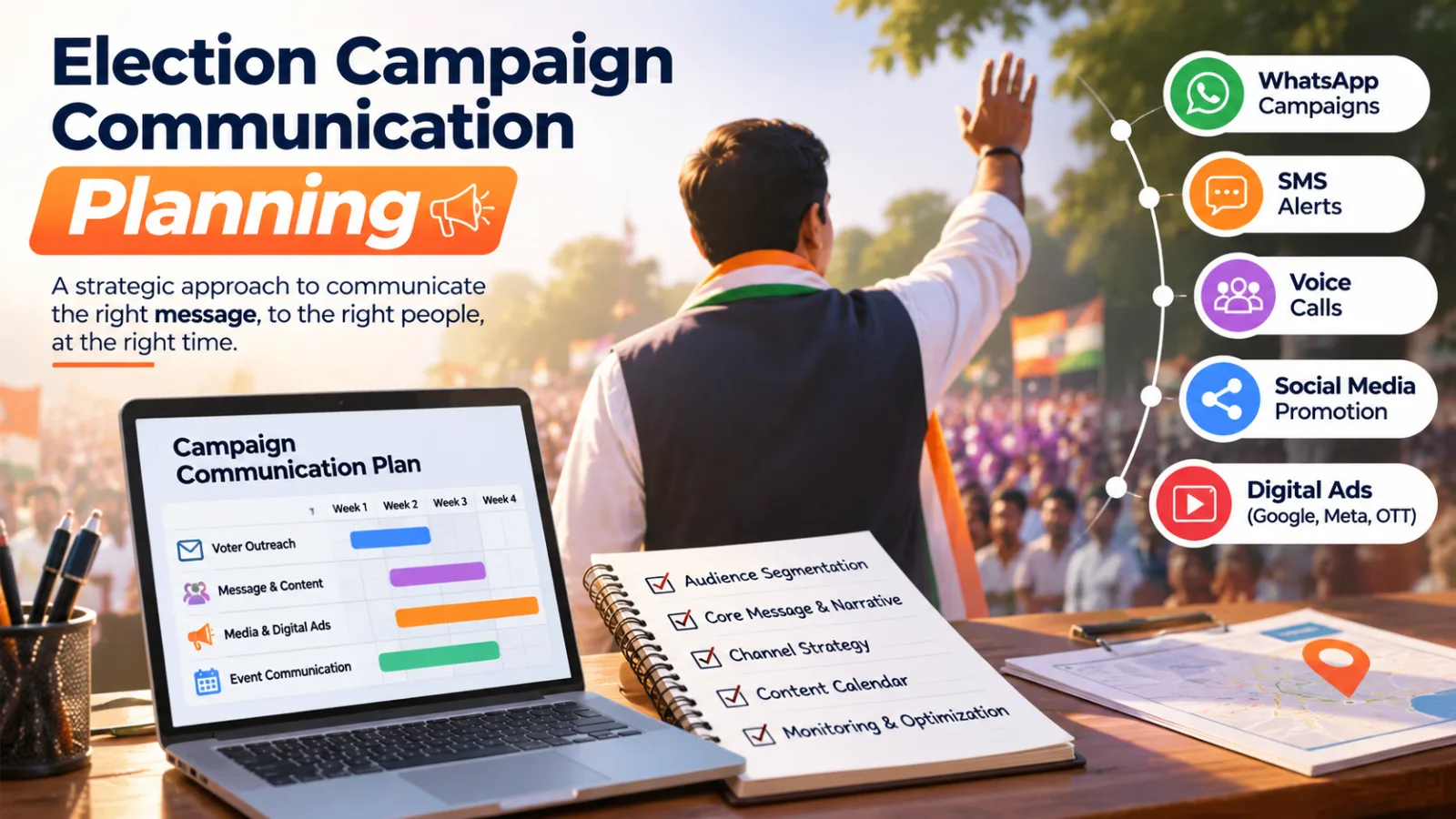
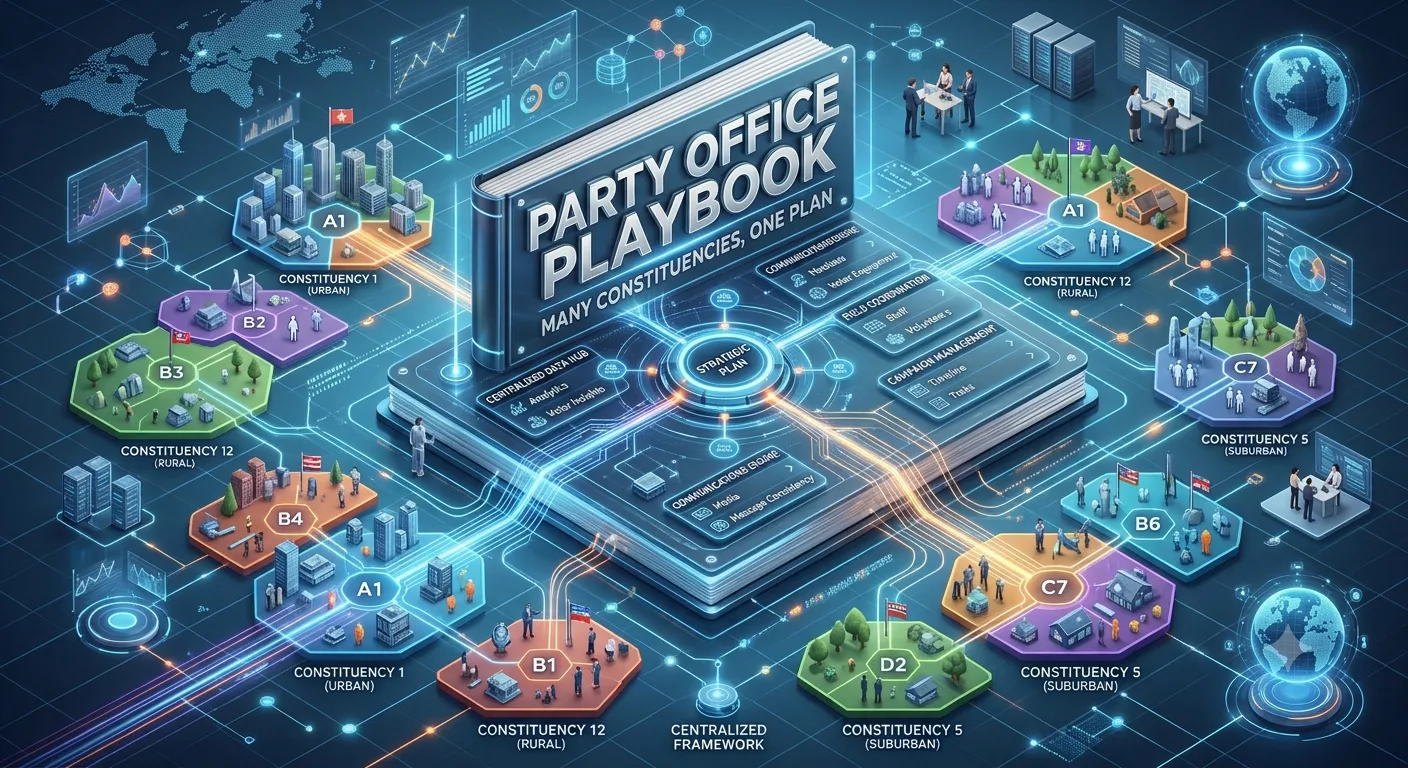
A party office keeps messages consistent across candidates and areas by using one approval route, one calendar, clear roles, and separate records for each candidate and area. Without those, each constituency invents its own process, and the errors appear when the pressure is highest.
This playbook sits inside our wider guide to political campaign marketing in India. It is written for party offices and campaign staff who handle communication for more than one seat at a time.
By Rupali Dahiwal. Last updated: 7 November 2026. This is operational guidance, not legal advice.
Our election campaign SMS service page covers what we run, the approvals involved and how to start.
Why does a multi-constituency campaign go wrong?
Usually because work is split but rules are not. Three teams write three templates, two upload their own lists, and nobody knows which version was approved. A wrong date or a wrong venue then goes to thousands of people before anyone notices. The fix is not more people. It is fewer routes.
What does one approval route look like?
Every message, for every candidate, goes through the same steps in the same order: draft, language review, internal approval, pre-certification where it applies, then the SMS template or voice clip approval. Our approval workflow guide sets out the steps. Write the route on one page and give it to every district team. Treat a message that has skipped a step as not ready.
Pre-certification is covered in the MCMC pre-certification guide. Template approval takes time and we do not control the operators, so every team should submit early. A template that is still pending on the day is a template that cannot be used.
How should files and records be organised?
Use one folder per candidate and one subfolder per area, with the same names everywhere. In each, keep the approved text, the list used, the date and time of the send, and the delivery report. Name every campaign by candidate, area and purpose, so that anyone who was not there can tell what it was. Our guide for agencies managing multiple clients has a checklist that fits this well.
Keep each candidate's records separate. Expenditure on communication is recorded against the candidate it was spent for, and our expenditure records checklist says what to keep. We do not give accounting advice here, so confirm your own rules with the people who file the statements.
Who does what?
A central owner for the calendar, so that no two constituencies send conflicting messages on the same day.
One approver for message text, with a deputy.
A list owner in each area, responsible for clean numbers and consent records.
A language reviewer for each language in use.
A named person, with a backup, who can pause every channel at once.
Share the names and phone numbers with the team and with your account manager at the provider, so a pause request does not wait on a search for the right person.
How do you read reports across areas?
Name each campaign after its area, and ask for one report per campaign. A single report covering many areas cannot be split afterwards. Look at sent, delivered and failed counts for each, and compare them with the plan. Plan for delivery of up to about 75 per cent, because of invalid numbers, DND and other issues in the messaging ecosystem. Our guide to measuring campaign delivery explains what a report can and cannot show.
What happens when a message is wrong?
Stop the send, correct it through the approval route, and tell the teams in the affected areas. A correction and pause workflow agreed in advance saves the first hour, which is the one that matters. Keep the wrong message, the correction and the times in the file for that candidate.
What should be ready before the campaign starts?
Register the sender and the templates on DLT early, since the paperwork and the timeline are what most teams underestimate. Ask each area for a clean list, with one number per row and no spaces or special characters, because numbers with them are not recognised and no message is sent to them. Agree the sending hours too. Our WhatsApp marketing portal runs between 10 am and 6 pm, and we do not run campaigns after 8 pm, so a calendar that ignores those limits will fail on the day.
Finally, buy the volume in advance. Credits are added after our finance team confirms payment, usually within about an hour, and a party office running many seats will use more than it expects in the last week.
Frequently asked questions
Can one account serve several candidates?
That depends on how you set up the sender, the lists and the records. Keep each candidate's approvals, lists and reports separate whatever the account structure, and ask us how it can be arranged.
Who should approve messages?
One named approver, with a deputy, for the whole party office. Candidates can suggest text, but the same route should approve it.
How do we avoid conflicting messages?
Keep one shared calendar and one central owner for it, and check it before every send.
What if a district team misses an approval?
Treat the message as not ready, and do not send it. A held-back message can be sent later. A wrong one cannot be recalled.
Sources checked
Election Commission of India, Press Note No. ECI/PN/038/2026 dated 20 March 2026. Checked 7 November 2026.
Planning a campaign? Send us the area, the dates and the languages through the election campaign SMS, voice and WhatsApp service page, and we will tell you what is possible.
About the author: Rupali Dahiwal is the founder of Smsniti and has around 8 to 10 years of experience in telecommunications. Rupali Dahiwal on LinkedIn.