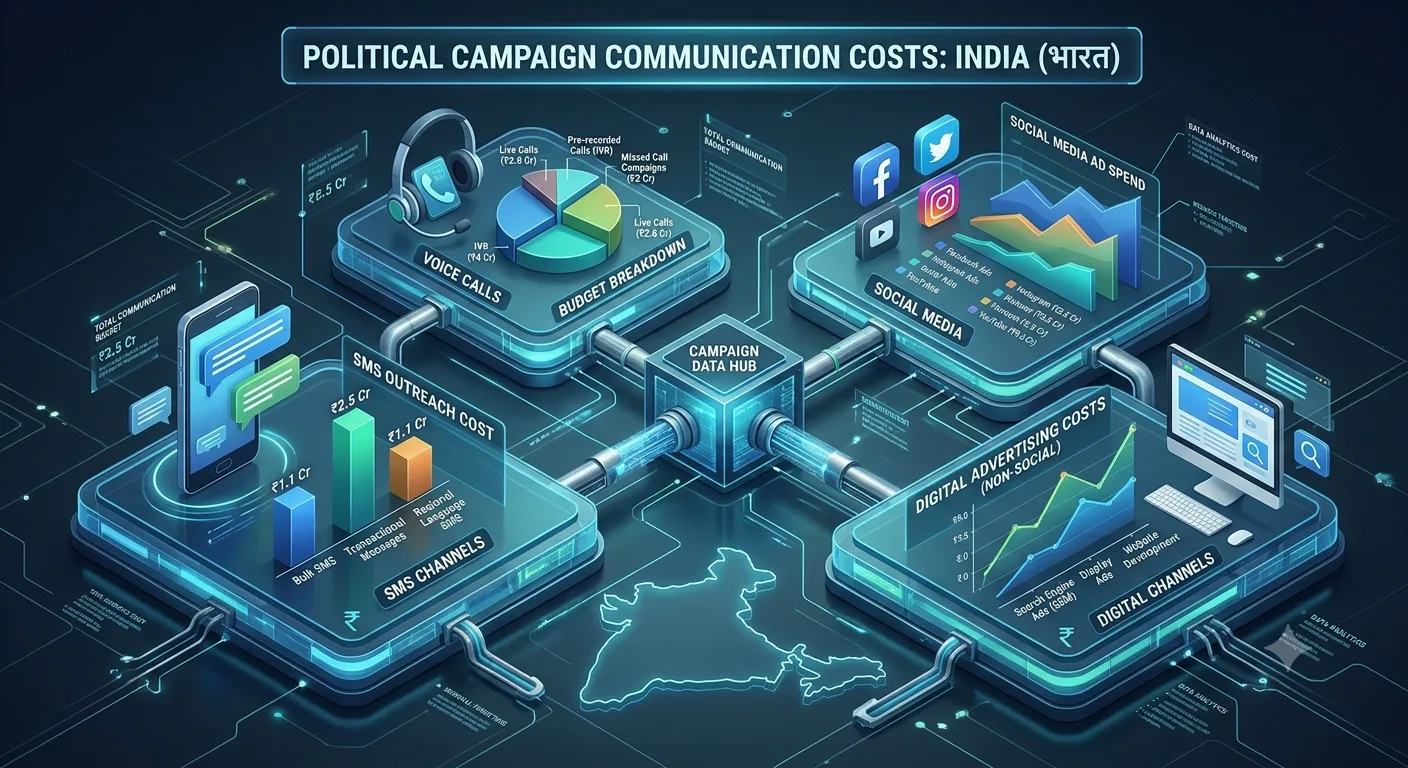
Political campaign communication costs depend mainly on volume, message type, language and script, the number of versions, production work, testing, compliance review, reporting and turnaround. Ask every provider for a written quote against the same scope, and treat any price quoted without those details as incomplete.
Campaign treasurers and agencies often ask for a rate before they have a scope. The more useful question is what makes a political campaign communication cost go up or down, so you can compare quotes fairly and plan a budget that survives contact with reality. This guide lists the cost drivers for SMS and voice campaigns, gives a quote worksheet and explains what to keep on record. It belongs to our wider guide to political campaign marketing in India. It deliberately contains no price list, because no honest general rate exists.
By Rupali Dahiwal. Last reviewed: 25 October 2026. This is operational guidance, not legal, tax or accounting advice. Check the current rules on election expenditure for your case.
Why this guide gives no rates
Prices change with provider, volume, route, message type and time. A rate quoted in an article is out of date quickly and may not match your scope. SMSNiti's own bulk SMS and bulk voice pages describe pricing as a custom quote based on volume and message or call type, and give no figures. That is normal for the category. The right approach is to learn the drivers, then ask for quotes.
The main cost drivers for SMS
Volume
The number of messages sent is the most obvious driver. Providers commonly price per message, and many reduce the unit price as volume rises. Ask where the price bands start and what happens if your volume changes during the campaign.
Message length and script
A long message can be split into several parts and billed as several messages. Text in Hindi and other Indian scripts typically uses Unicode, which fits fewer characters in one part than plain English text. These are typical technical limits, so check how your provider counts parts and whether the panel shows the count before sending. Shorter, clearer messages cost less and read better.
Message category
Telecom rules sort messages into categories, and providers may price categories differently. Ask which category applies to your messages and how it affects the price. Do not pick a category just because it is cheaper. A mismatch between category and real purpose can cause rejection or later problems.
Number of versions
Each language version and each template is a separate item to prepare, register and review. Ten districts with three languages is a very different job from one list in one language.
Setup and registration
Sender and template registration on the telecom platform is part of the work. SMSNiti's DLT page says some operators charge a registration fee and that the amount depends on the operator. Ask whether setup is included in the quote or billed separately.
The main cost drivers for voice
Number of calls and call length. Ask whether the provider bills by call, by time connected or by blocks of seconds. A longer script can cost more.
Answered versus attempted calls. Some pricing counts every attempt. Ask which.
Retries. SMSNiti's voice page describes auto retry for unanswered calls. Retries may add attempts, so ask how they are counted and capped.
Recording or text-to-speech. A professional recording has a production cost. Text-to-speech may not, but it needs careful review.
Key-press responses and reports. Ask whether response capture and detailed call reports are included.
Calling hours. A narrow window can mean more concentrated peak load and may affect scheduling.
See bulk voice calls for election campaign communication for how a voice campaign is planned, and how to brief a voice recording for production costs to expect.
Costs outside the sending price
Content production. Writing, fact checking and translation.
Language review. Native-speaker review for each language and script.
Audio production. Speaker, studio time and editing.
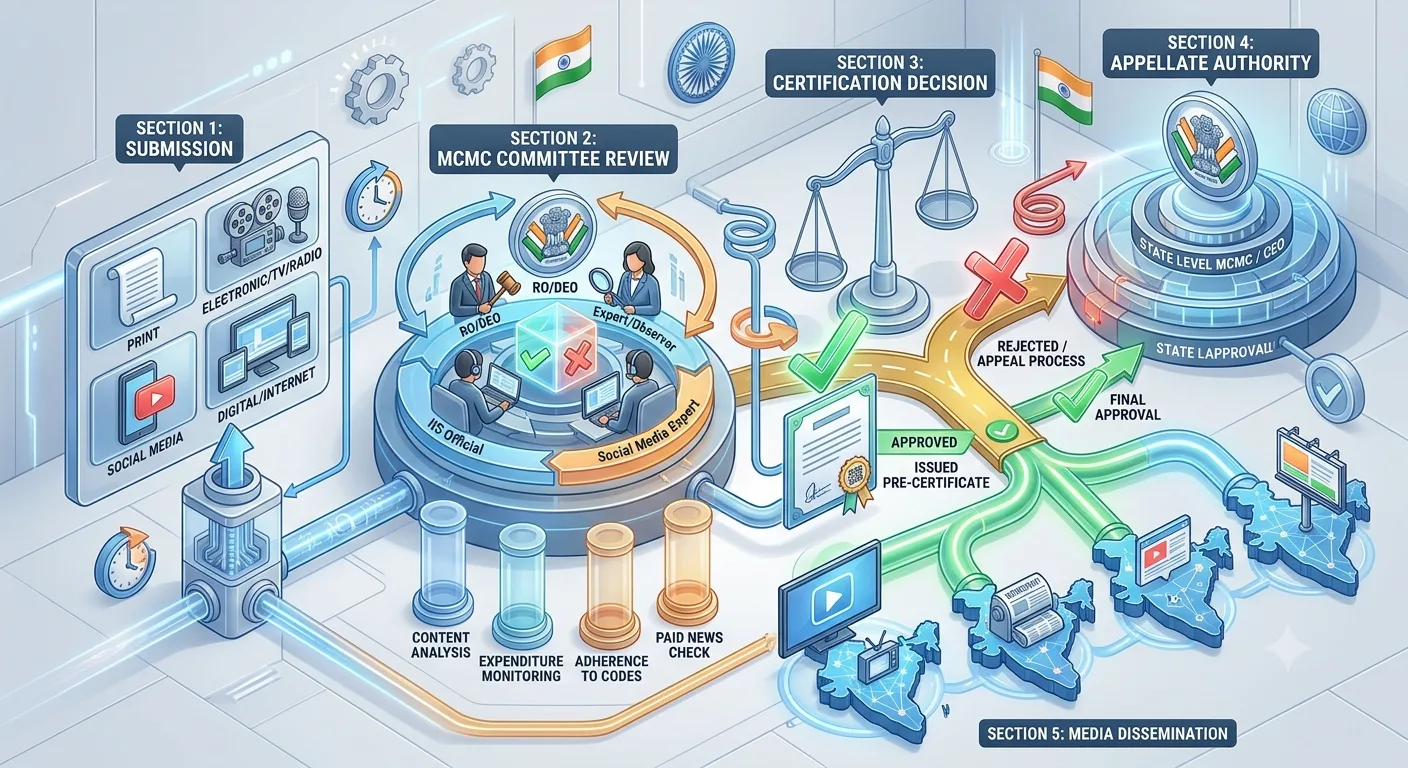
Compliance review. Time with an adviser and any application effort for election-specific approval. For the elections covered by its press note of 20 March 2026, the Election Commission required political advertisements on electronic media, including bulk SMS and voice messages, to be pre-certified by the Media Certification and Monitoring Committee.
Testing. Test sends and test calls on real phones.
Reporting and close-out. Staff time to read reports and keep records.
Support and escalation. Whether urgent support during peak days is included.
Turnaround. Rushed template submissions or recordings may cost more or fail more often.
A quote worksheet you can copy
Send the same worksheet to every provider so the quotes can be compared:
Channels and message or call types.
Estimated volume per month and the peak week.
Languages and scripts, and the number of templates or recordings.
Average message length, or script length in seconds.
Setup items: sender registration, templates, links.
Reports required and their format.
Support hours and escalation contact.
Test sends included.
Payment terms, validity of the quote and any minimum commitment.
What is excluded.
Ask for the quote in writing and for definitions of every chargeable unit. If you are still choosing a provider, our provider scorecard shows how to compare more than price. If you are deciding what to buy at all, see what to outsource and what to keep in-house.
How to compare two quotes fairly
Convert both to the same unit, for example total cost for your estimated volume.
List what each includes and excludes side by side.
Add your own costs for anything excluded.
Check the validity period and any price change clauses.
Look at the risk each quote leaves with you, such as no support on peak days.
The cheapest quote often leaves the most work and risk with you. Treat price as one row in the comparison, not the answer.
Records and expenditure
Keep the quote, the invoice, the delivery or call reports and the approved content together for each send. The Election Commission's 20 March 2026 note refers to Section 77(1) of the Representation of the People Act, 1951 and says parties should submit a statement of expenditure on internet and social media campaigning to the ECI within 75 days of the completion of the elections. Rules on expenditure differ by role and election, so confirm what applies to you with your election expenditure contact. Do not rely on a vendor for this.
A hypothetical budget structure
This is an illustration of structure only. It uses no real figures and is not a real campaign. An agency planning notices for one district could list its budget lines as: sender and template setup; SMS volume across the campaign window; voice recording and calls for one reminder; native-language review in two languages; test sends; reports and close-out; and a contingency line for corrections. Each line would get its figure from a written quote or an internal estimate, and the total would be compared against the plan, not against a rate found online.
Planning a contingency
Campaigns rarely run exactly to plan. A date moves, a venue changes, a message needs correcting or a template is returned for changes. Each of these can mean extra messages, an extra recording or an extra review. Add a contingency line to the budget instead of discovering the need mid-campaign. A simple approach is to agree in advance what counts as a chargeable correction, who authorises extra spend and how quickly a revised quote can be produced. Keep that agreement with the written quote, so there is no argument when the situation arises.
Also decide in advance what you will do if a template is rejected or delayed. Leave time in the calendar, and ask the provider how it handles resubmission. Delay has a cost even when the provider charges nothing, because a late send may miss the moment it was meant for. Our guide to the political campaign communication brief shows how to record these decisions in one document.
Common mistakes
Asking for a rate with no scope. You will get a number that means little.
Ignoring the cost of script and language. Splits and extra versions add up.
Leaving out compliance and review time. It is real work.
No contingency. Corrections and retests happen.
Accepting a price without definitions. Ask what a unit is.
Publishing invented benchmarks. Use your own records.
Frequently asked questions
How much does bulk SMS cost for an election campaign?
It depends on volume, message type, language, number of templates and the provider. Providers such as SMSNiti quote by volume and message type, so ask for a written quote against your scope.
Does regional-language SMS cost more?
It can, because Indian scripts typically fit fewer characters per message part, so a message may be billed as more parts. Check how your provider counts parts.
Are setup and DLT registration included in the price?
Not always. Some operators charge a registration fee, and providers may include or bill setup separately. Ask for it in writing.
What is not included in a sending price?
Often content, language review, audio production, compliance review, testing and reporting time. List them in your budget.
Can I get a fixed rate for the whole campaign?
Some providers offer volume-based or agreed pricing. Whether that suits you depends on how certain your volume is. Ask what happens if volume changes.
Sources checked
Election Commission of India, Press Note No. ECI/PN/038/2026 dated 20 March 2026. Checked 24 October 2026.
SMSNiti bulk SMS service, bulk voice call service and DLT registration pages, for the pricing model, retry and registration statements. Checked 25 October 2026.
To compare costs for your campaign, ask SMSNiti for a written bulk SMS quote based on the worksheet above, and compare it against any other quote you receive.